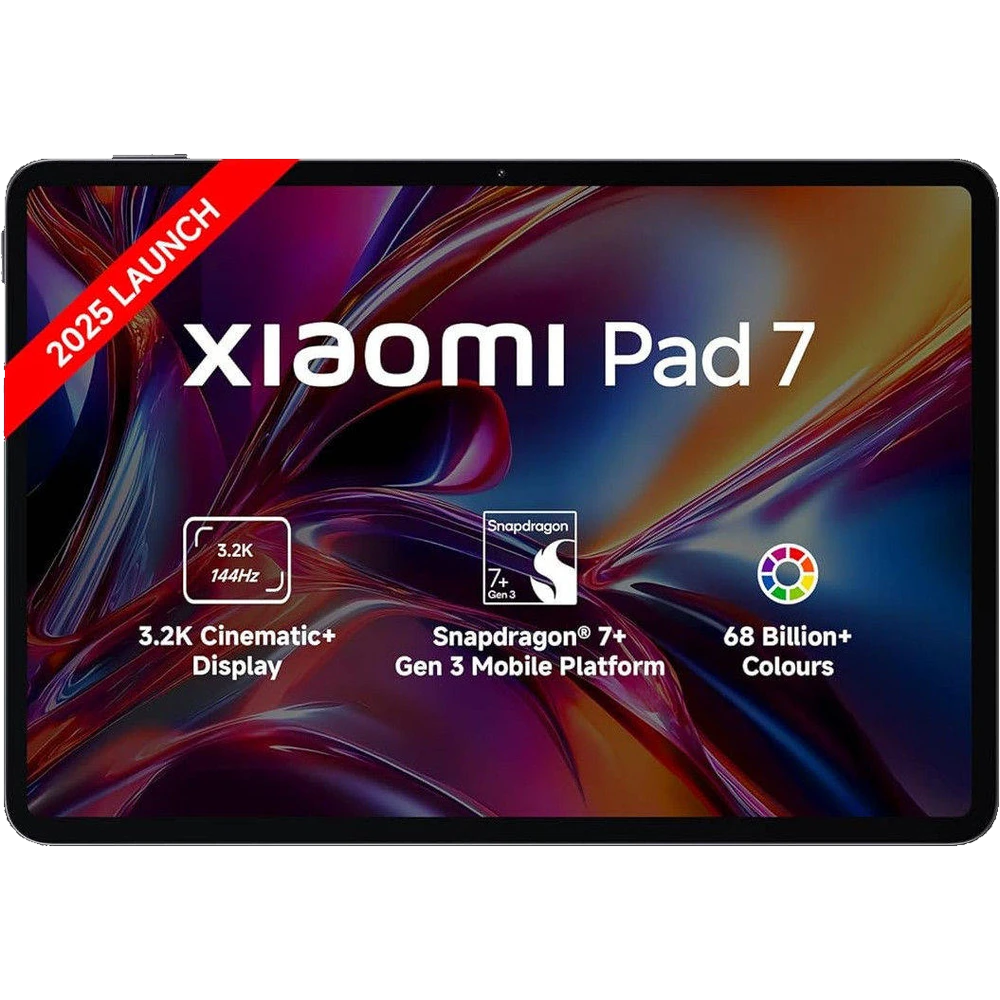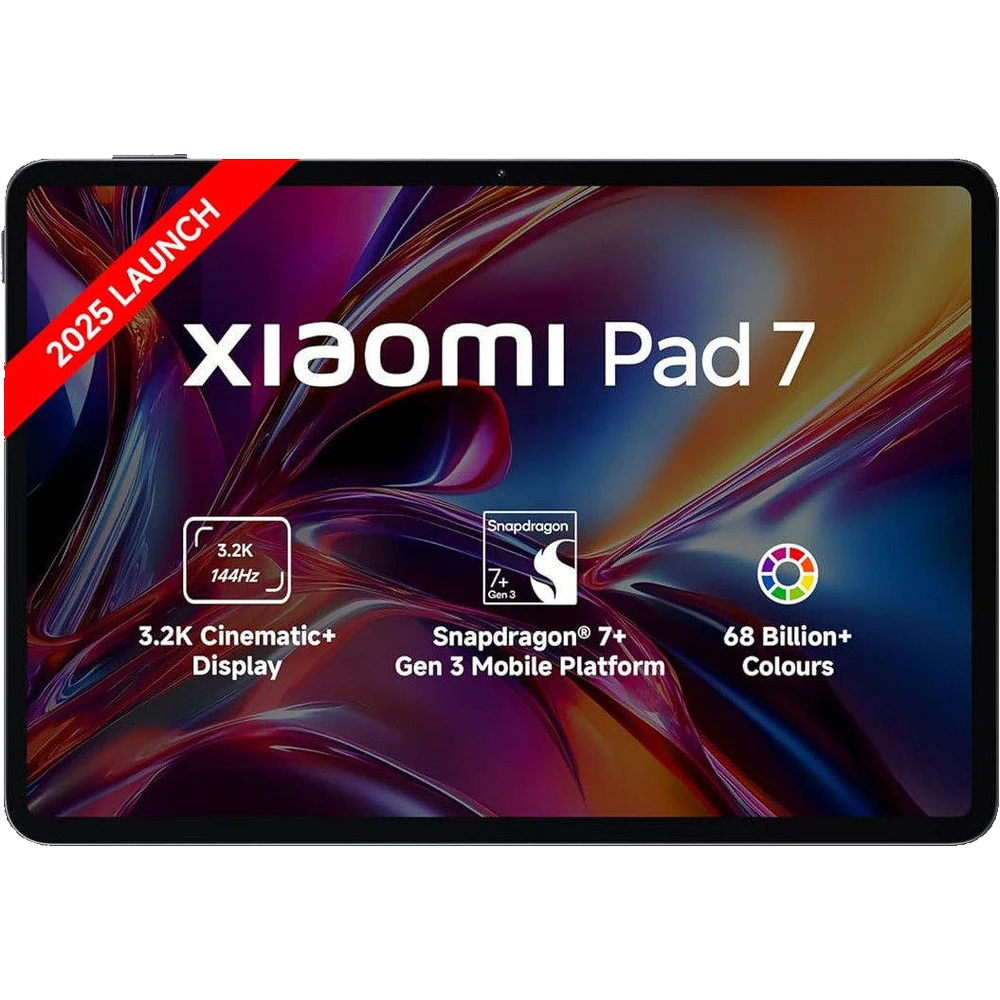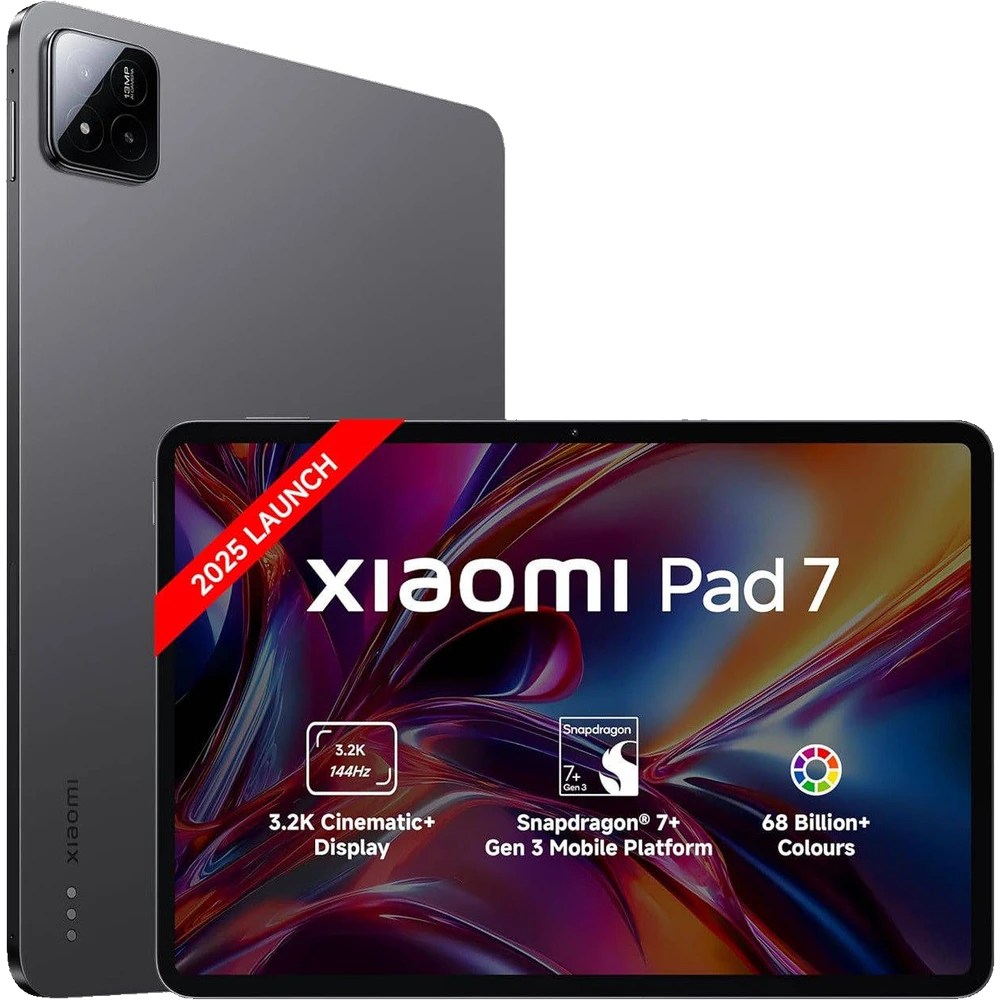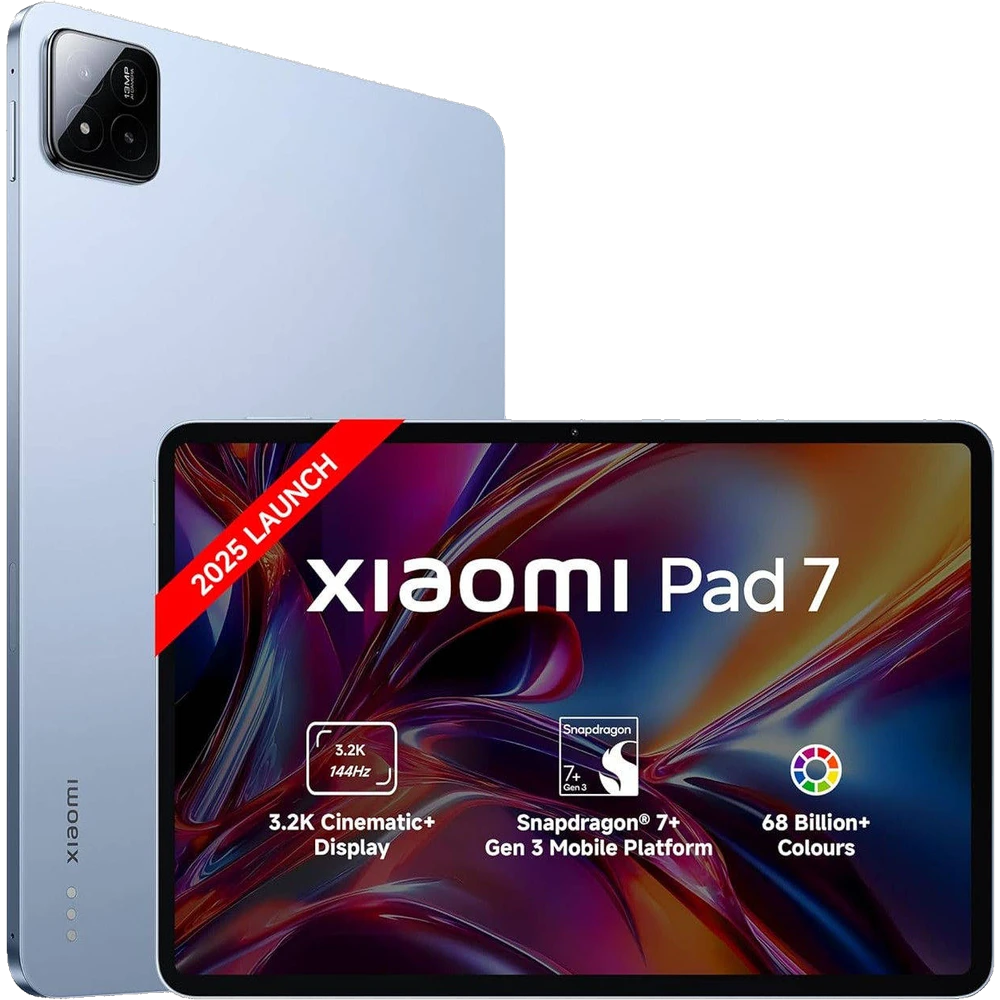
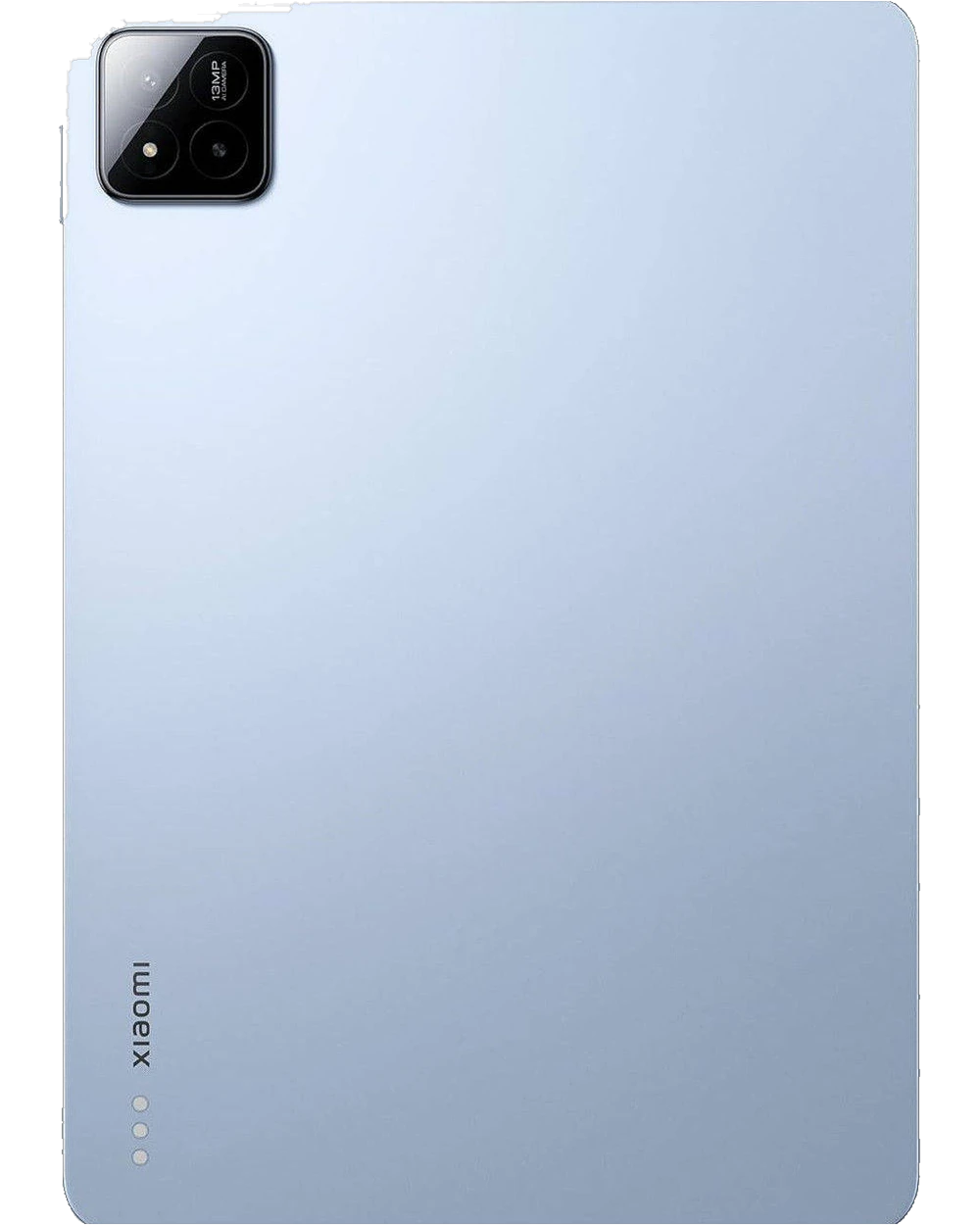
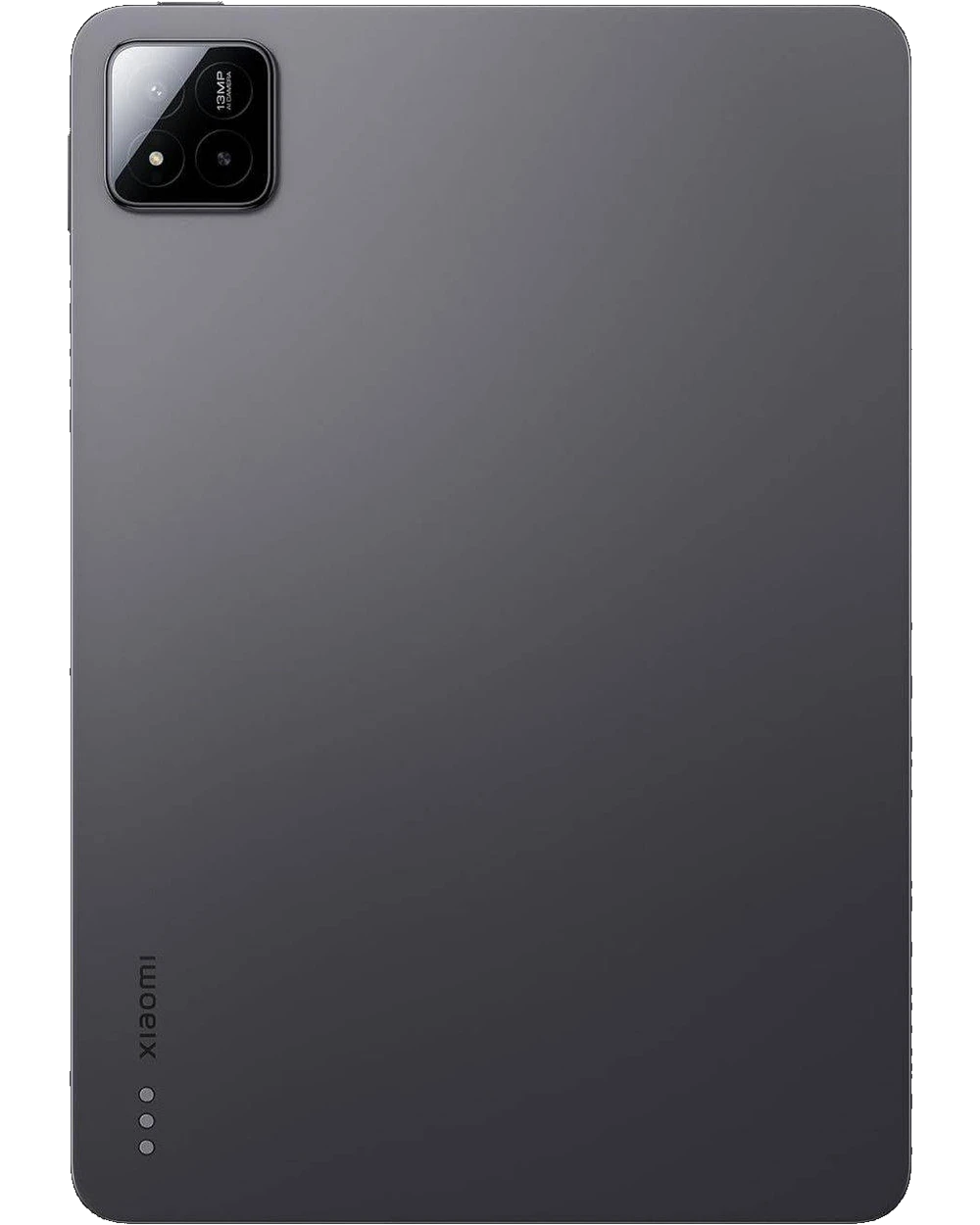
• Xiaomi
  • Available
  • 8,850 mAh battery
  • 144 Hz LCD
  • 45W charging
  • 11.2 inches
  • 2024
Xiaomi

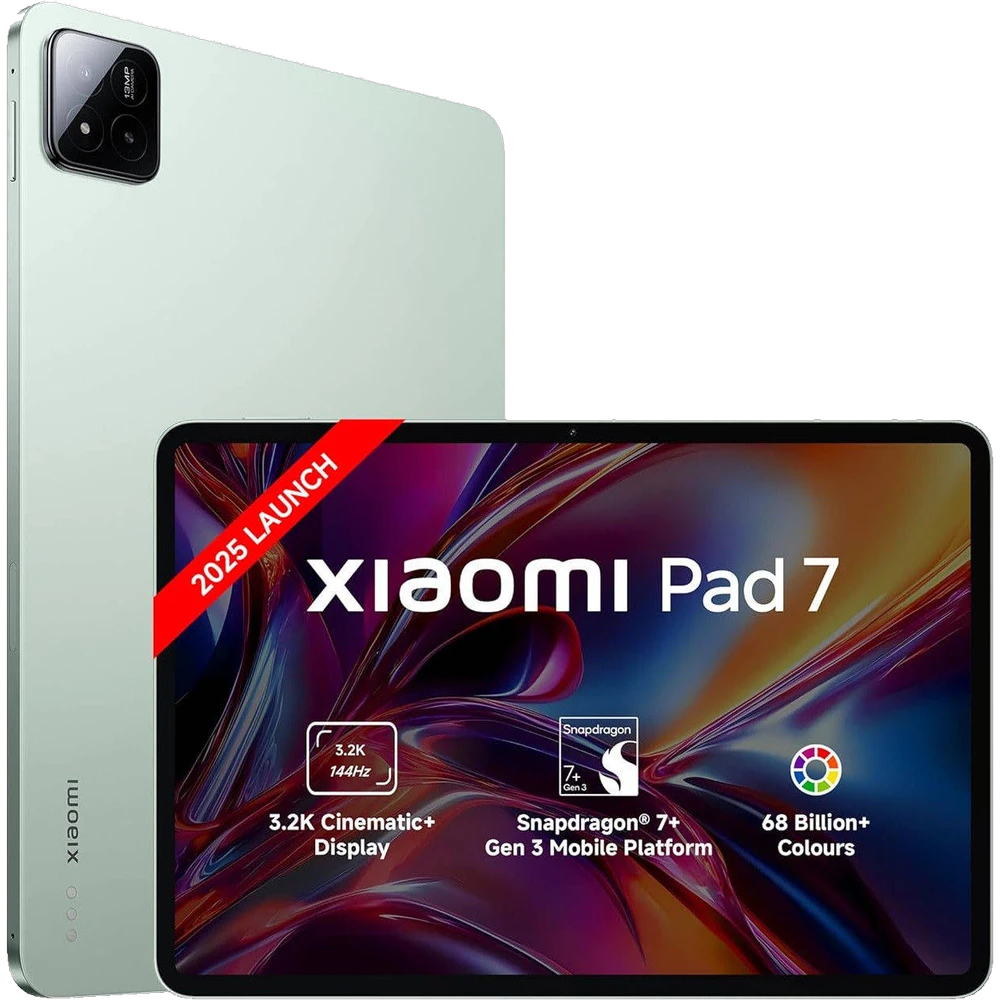
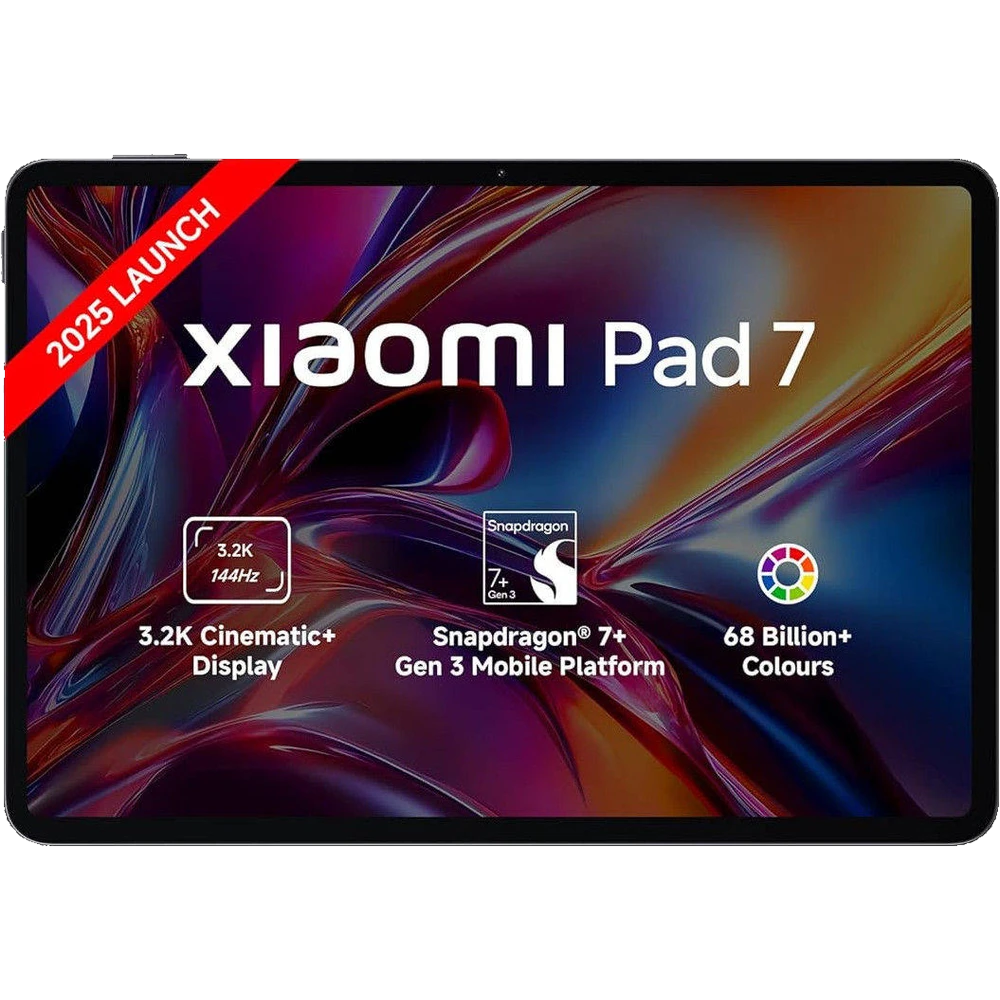
Xiaomi Pad 7Price & Full Specs

  • AnnouncedOct 2024
  • ReleasedOct 2024

India · Launch price

₹ 27,999

Launch price in India. Today's prices may differ.

Summary

Display
11.2″
IPS LCD · 144 Hz
Chipset
SM7675-AB
Snapdragon 7+ Gen 3 · 4 nm
RAM
8 GB
128 GB storage
Main camera
13 MP
Selfie
8 MP
Battery
8,850 mAh
45 W wired
Build
500 g
6.2 mm
Software
Android 15
HyperOS 2

Network & SIM

3 specs
Technology
No cellular connectivity

Network technology lists the cellular standards the device supports, such as GSM, LTE or NR. It determines which carrier networks the device can register on.

SIM Configuration
No

SIM configuration describes how many SIM slots the device has and how they operate, such as single, dual or hybrid. It determines whether two carriers can run at once.

eSIM
No

eSIM indicates whether the device includes an embedded SIM, a digital carrier profile that replaces a physical card. It enables remote carrier switching and dual-SIM use.

Design & Body

9 specs
Form Factor
Tablet

Form factor names the device's overall shape and handling style, such as candybar, slider or flip. It determines how the device fits in the hand and pocket.

Size & weight

Shown to scale against an A4 sheet

173.4 × 251.2 mm
Width × height
6.2 mm
Thickness
500 g
Weight
11.2″
Screen

Weight states the device's mass in grams, including its built-in battery but excluding any case. It influences one-handed comfort, pocket carry and fatigue during long calls.

Dimensions give the device's height, width and thickness in millimetres, measured in its normal working shape. They show whether the device fits one-handed use and pockets.

Build
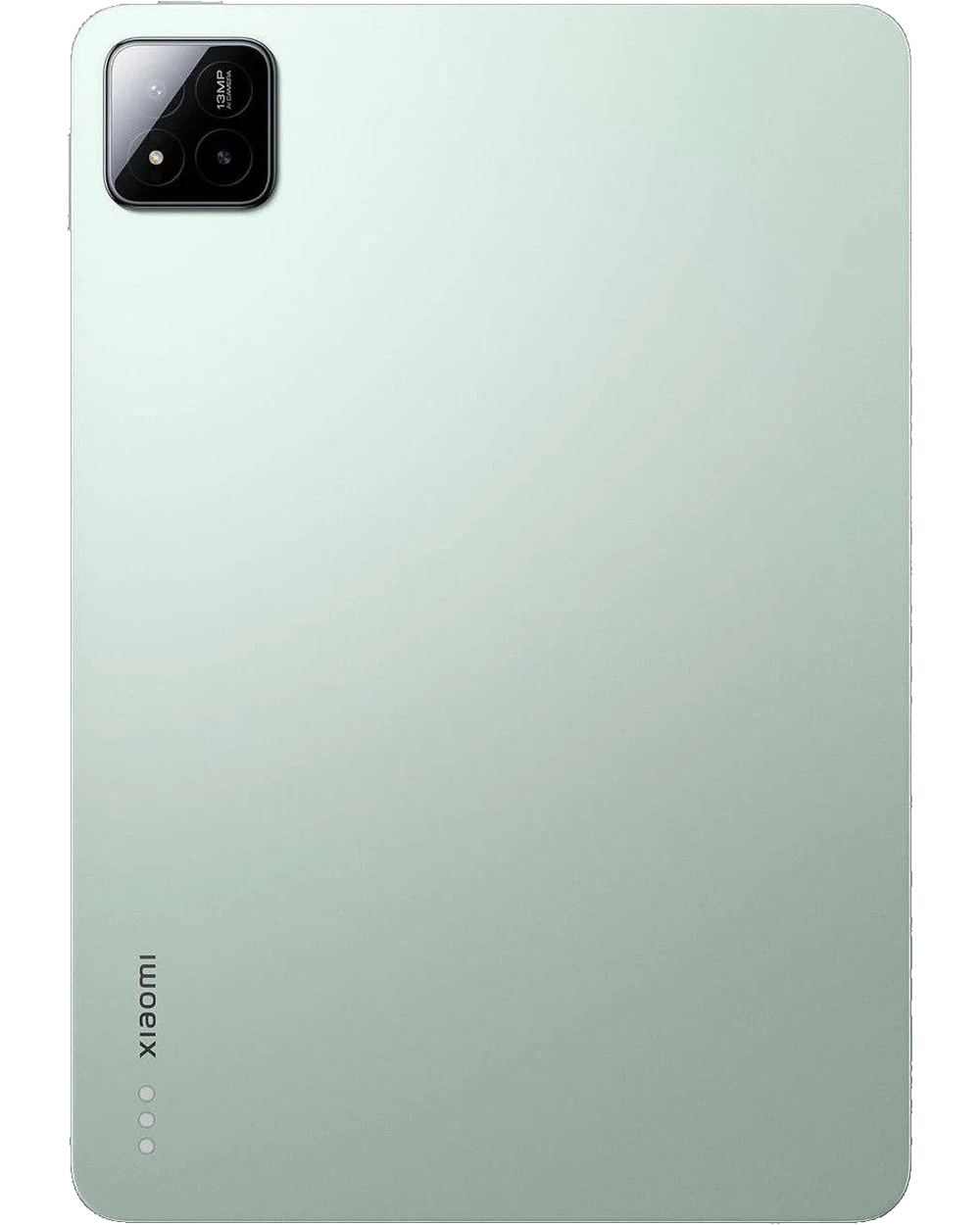
Glass front, aluminum frame, aluminum back

Build summarizes the device's construction and protective design, such as glass front, aluminum frame and glass back. It gives a quick view of perceived quality and durability.

Frame Material
aluminum

Frame material names what the device's side rails are made of, such as aluminum, stainless steel or plastic. It affects weight, durability and perceived quality.

Front Material
Glass

Front material names the covering over the display, such as Gorilla Glass or hardened plastic. It indicates the scratch and drop protection the screen carries.

Back Material
aluminum

Back material names the panel covering the rear of the device, such as glass, plastic or vegan leather. It affects grip, wireless charging and durability.

Variant Weights
500 g (1.10 lb)

Device weights for the specified Wi-Fi, cellular or other versions.

Dimensions by configuration
251.2 x 173.4 x 6.2 mm (9.89 x 6.83 x 0.24 in)

Body measurements that vary by case size, connectivity, accessories or operating position.

Display

9 specs
Display Count
1

Display count states how many separate screens the device has, including main, cover and secondary panels. It determines how many surfaces show content at once.

Type
Panel Type IPS LCDHDR Standards HDR10, Dolby Vision

Display type classifies the screen under a standard panel family, such as OLED, LCD or e-paper. It lets buyers compare screens by technology generation across brands.

Screen Size
11.2inches

Screen size states the diagonal measurement of the display in inches. Combined with resolution it determines how large text and images appear to the user.

Resolution
Screen Resolution 2136 × 3200 pxPixel Density 344 ppiAspect Ratio 3:2 ratio

Display resolution identifies the standardized pixel grid of the screen as a shared reference record, such as 1080 × 2400. It keeps resolution data identical across models.

Refresh Rate
144Hz

Refresh rate states how many times per second the display redraws the image, in hertz. Higher rates make scrolling and animation look smoother to the eye.

Color Gamut
DCI-P3

Color spaces the display supports or covers.

Brightness conditions
800 nits

The content, screen area, automatic mode and test conditions associated with brightness figures.

Screen area
373.7cm²

The area of the specified primary screen, measured in square centimetres.

Screen-to-body ratio
85.8%

The reported share of the front surface occupied by the specified screen.

Platform

12 specs
Software
Android 15 · HyperOS 2

Operating system links the device to its full OS record, combining name, version and upgrade path in one reference entry. It keeps software data consistent across models.

Chipset
Chipset Name Qualcomm SM7675-AB Snapdragon 7+ Gen 3Process Node (4 nm)

Chipset links the device to its standardized system-on-chip record, grouping all models that share the same silicon. It enables exact like-for-like performance comparisons across brands.

CPU

Octa-core (1×2.8 GHz Cortex-X4 + 4×2.6 GHz Cortex-A720 + 3×1.9 GHz Cortex-A520)

  • Prime cores1 × 2.8 GHzCortex-X4

    Prime cores are the fastest cores in the CPU, used for short bursts such as app launches, gaming and camera processing. They make the phone feel quick.

  • Performance cores4 × 2.6 GHzCortex-A720

    Performance cores carry sustained work such as multitasking, gaming and video export, balancing speed and power use.

  • Efficiency cores3 × 1.9 GHzCortex-A520

    Efficiency cores handle light and background tasks such as messaging, music and standby at low power. They extend battery life rather than speed.

CPU describes the processor core layout inside the chipset, such as 1+3+4 with clock speeds. It indicates how the device handles multitasking and sustained workloads.

CPU Cores
8

CPU cores states how many processing cores the chipset contains, such as six or eight. More cores improve multitasking and parallel workloads like video export.

Maximum CPU Clock
2.8GHz

CPU max clock states the highest frequency any core in the chipset can reach, in gigahertz. It indicates the peak single-thread speed available for short bursts.

GPU
Adreno 732

GPU names the graphics processor inside the chipset, such as Adreno 830 or Mali-G925. It determines gaming frame rates, UI smoothness and video rendering speed.

OS Update Policy
up to 4 major OS updates

OS update policy states how many major operating-system upgrades the manufacturer promises and over how many years. It indicates how long the device stays current.

Major OS upgrades
4

The number of major operating-system upgrades explicitly promised for the device.

Platform variants
Android 15, up to 4 major OS updates, HyperOS 2
Qualcomm SM7675-AB Snapdragon 7+ Gen 3 (4 nm)
Octa-core (1x2.8 GHz Cortex-X4 & 4x2.6 GHz Cortex-A720 & 3x1.9 GHz Cortex-A520)

Processor, software or performance-hardware differences between regional and storage configurations.

Memory & Storage

5 specs
RAM
8GB

RAM links the device to its standardized memory record, combining size and type in one reference entry. It keeps RAM data identical across models for exact comparisons.

Storage
Storage Size 128 GBStorage Type UFS 3.1

Storage links the device to its standardized internal-storage record, combining capacity and storage standard in one reference entry. It keeps storage data consistent across models.

Memory Variants
128GB 8GB RAM256GB 8GB RAM256GB 12GB RAMUFS 3.1 - 128GB only

Memory variants list the RAM and storage combinations the device is sold in, such as 8 GB + 128 GB or 12 GB + 512 GB. They show which configurations exist per market and price tier.

Memory Card Slot
No

Memory card slot indicates whether the device accepts a removable memory card for extra storage, such as microSD. It determines whether storage can be expanded after purchase.

Memory Notes
UFS 3.1 - 128GB only
UFS 4.0

Memory notes record extra conditions about memory and storage, such as shared SIM slots or actual usable space. They clarify details the headline numbers do not show.

Rear Camera

7 specs

Main camera

1
Megapixels
13 MP
Aperture
f/2.2
Lens type
wide
Sensor format
1/3.06"
Native pixel pitch
1.12 µm
Focus methods
PDAF
Camera notes
13 MP, f/2.2, (wide), 1/3.06", 1.12µm, PDAF

Main camera links the device to the standardized record of its primary rear camera, combining sensor, lens and stabilization data. It keeps main-camera specs identical across models.

Aperture: how much light gets through

A smaller f-number is a wider opening: more light, more background blur, less of the scene in focus.

f/2.2
Lens
Main
Aperture
f/2.2 · fixed
Light vs widest lens
100% · the widest
Background blur
Soft
Zone in focus
Moderate
One scene at three apertures, shot with a 50 mm camera lens, not with this phone: the frame nearest the chosen lens is marked. Opening width scales with 1/f and light with 1/f². Photos: Alex1ruff, CC BY-SA 4.0, via Wikimedia Commons.
Rear Camera Count
1

Rear camera count states how many separate camera modules sit on the back of the device. It indicates whether the device offers single, dual or multi-lens photography.

Camera Features
LED flashHDRpanorama

Camera features list the photo-side capabilities of the rear camera system, such as auto-HDR, panorama or night mode. They show which shooting modes work out of the box.

Video Recording
4K@30fps, 1080p@30/60fps

Rear video recording lists the resolution and frame-rate modes the rear cameras support, such as 8K at 30 fps or 4K at 120 fps. It shows the highest video quality the device can capture.

Rear Flash
LED flash

Rear flash describes the light source built beside the rear cameras, such as dual-LED or True Tone. It determines how well the device illuminates subjects in low-light photos.

Rear camera variants
13 MP, f/2.2, (wide), 1/3.06", 1.12µm, PDAF

Rear camera hardware or recording differences between configurations.

Rear recording conditions
4K@30fps, 1080p@30/60fps

Lens, resolution, frame-rate, HDR and stabilization restrictions for rear video modes.

Front Camera

5 specs

Selfie camera

1
Megapixels
8 MP
Aperture
f/2.3
Lens type
wide
Sensor format
1/4.0"
Native pixel pitch
1.12 µm
Camera notes
8 MP, f/2.3, (wide), 1/4.0", 1.12µm

Front camera links the device to the standardized record of its primary selfie camera, combining resolution, sensor, aperture and autofocus. It keeps selfie-camera specs identical across models.

Aperture: how much light gets through

A smaller f-number is a wider opening: more light, more background blur, less of the scene in focus.

f/2.3
Lens
Selfie
Aperture
f/2.3 · fixed
Light vs widest lens
100% · the widest
Background blur
Soft
Zone in focus
Moderate
One scene at three apertures, shot with a 50 mm camera lens, not with this phone: the frame nearest the chosen lens is marked. Opening width scales with 1/f and light with 1/f². Photos: Alex1ruff, CC BY-SA 4.0, via Wikimedia Commons.
Front Camera Count
1

Front camera count states how many separate camera modules face the user on the device. It determines whether the device offers single or dual selfie perspectives.

Front Video Recording
1080p@30fps

Front video recording lists the resolution and frame-rate modes the selfie camera supports, such as 4K at 60 fps. It shows which video call and selfie-video quality the device delivers.

Front Camera Features
HDR

Front camera features list the photo-side capabilities of the selfie camera, such as HDR, night mode or portrait mode. They show which selfie enhancements work out of the box.

Front camera conditions
8 MP, f/2.3, (wide), 1/4.0", 1.12µm

Front camera position, recording-mode and configuration restrictions.

Sound

4 specs
Loudspeaker
Yes, with stereo speakers (4 speakers)

Loudspeaker states whether the device has a built-in external speaker, such as single bottom-firing or stereo. It determines whether media plays out loud and how full it sounds.

Speaker Count
4

Speaker count states how many separate loudspeaker drivers the device contains, such as one, two or four. More drivers usually widen the soundstage and enable true stereo separation.

Stereo Speakers
Yes

Stereo speakers indicates whether the device outputs two-channel sound from separate left and right drivers. Stereo separation makes music and video dialogue sound wider and more directional.

Audio Features
24-bit/192kHz Hi-Res & Hi-Res Wireless audio

Audio features list the extra sound capabilities the device supports, such as hi-res audio, Dolby Atmos or spatial audio. They show which listening experiences the device can deliver.

Battery & Charging

6 specs
Battery Capacity
8850mAh

Battery capacity states the energy stored in the device's battery, in milliamp-hours, such as 5000 mAh. It is the raw figure behind runtime, but actual endurance depends on usage.

Wired Charging
45W

Wired charging states the maximum power, in watts, the device accepts over a USB cable from a compatible adapter. It determines how fast the battery refills from empty.

Wired Charging Standards
PD3.0QC3

Wired charging standards list the fast-charging protocols the device negotiates over USB, such as USB PD, QC or proprietary. They determine which chargers deliver the rated speed.

Charging Time
45W wired, PD3.0, QC3+, 100% in 1h 20 min

Charging time states how long the device takes to reach a stated battery percentage from empty, such as 75% in 30 minutes. It translates wattage into real-world wait time.

Battery configurations
8850 mAh

Battery differences between sizes, hardware configurations or supported battery packs.

Charging requirements
45W wired, PD3.0, QC3+, 100% in 1h 20 min

Charger, cable, protocol, temperature and battery-level conditions required for charging claims.

Connectivity

14 specs
Wi-Fi Standard
Wi-Fi 802.11 a/b/g/n/ac/6e

Wi-Fi standard states the highest 802.11 generation the device supports, such as Wi-Fi 6E or Wi-Fi 7. It determines maximum wireless throughput and latency on compatible routers.

Wi-Fi Bands
dual-band

Wi-Fi bands list the frequency ranges the device's wireless LAN can use, such as 2.4 GHz, 5 GHz or 6 GHz. More bands reduce congestion and increase throughput on compatible routers.

Wi-Fi Features
Wi-Fi Direct

Wi-Fi features list extra wireless-LAN capabilities the device supports, such as Wi-Fi Direct, hotspot or 6 GHz. They show which advanced network functions the device can perform.

Bluetooth Version
5.4

Bluetooth version states the core specification the device implements, such as 5.3 or 5.4. It determines range, speed and power efficiency for wireless accessories and audio devices.

Bluetooth Codecs
LHDC 5

Bluetooth codecs list the audio encoding formats the device supports over Bluetooth, such as SBC, AAC, aptX or LDAC. They determine wireless sound quality and latency.

NFC
No

NFC indicates whether the device can exchange data over short-range radio, typically for contactless payments, transit cards or device pairing. It enables tap-to-pay and quick pairing.

Infrared Blaster
Yes

Infrared blaster indicates whether the device includes an IR emitter that can control household appliances, such as TVs or air conditioners. It turns the device into a universal remote.

USB Connector
USB Type-C

USB connector names the physical port shape on the device, such as USB Type-C or micro-USB. It determines which cables and docks physically fit the device.

USB Version
3.2

USB version states the data and power specification of the device's port, such as USB 3.2 or USB4. It determines transfer speed and external display capability.

USB Features
accessory connector

USB features list extra capabilities of the device's port, such as OTG, DisplayPort alt mode or video out. They show whether the port can host drives or drive monitors.

Dual-Frequency GNSS
No

Dual-frequency GNSS indicates whether the device receives positioning satellites on two frequency bands. It improves location accuracy in cities and under tree cover or dense buildings.

FM Radio
No

FM radio states whether the device includes a built-in FM receiver and whether it needs wired headphones as an antenna. It determines whether broadcast radio plays without mobile data.

Bluetooth features
LHDC 5

Supported Bluetooth capabilities beyond version, service profiles and audio codec names.

USB data rate
USB 3.2 Gen 1Lên đến 5Gbps*Chức năng USB 3.2 Gen 1 yêu cầu cáp hỗ trợ USB 3.2 Gen 1 (được bán riêng).

The stated USB data transfer rate and its required operating mode.

Sensors & Security

1 specs
Sensors
Accelerometergyroproximitycompass

Sensors list the motion, environmental and proximity sensors built into the device, such as accelerometer, gyroscope and barometer. They enable screen rotation, navigation and smart automation.

Input & Accessories

2 specs
Stylus
Stylus support (magnetic)

Stylus name records the official product name of the compatible stylus, such as S Pen or M-Pencil. It lets buyers confirm which pen generation the device supports.

Stylus Features
Stylus support (magnetic)

Stylus features list extra pen capabilities, such as a Bluetooth remote button, hover gestures or tilt recognition. They define what the pen can do beyond basic writing and drawing.

Misc

3 specs
Model Numbers
2410CRP4CG

Model numbers list the official identifiers assigned to each variant of the device, such as SM-S938B or CPH2653. They let buyers match a listing, accessory or firmware to the exact version.

SAR test regime
EU SAR: 0.99 W/kg (body)

The regulatory regime and measurement convention associated with the published SAR figures.

Additional SAR measurements
EU: 0.99 W/kg (body)

Additional radio-frequency exposure measurements with body location and test regime identified.

Xiaomi Pad 7

Launch price₹ 27,999India

Compare

About the Xiaomi Pad 7

The Xiaomi Pad 7 is a tablet by Xiaomi, announced on 29 October 2024. It has a 11.2-inch IPS LCD display, the Qualcomm SM7675-AB Snapdragon 7+ Gen 3 (4 nm) running Android 15, a 13 MP main camera and a 8,850 mAh battery with 45 W wired charging. It launched at ₹27,999 in India.

Xiaomi Pad 7 specifications include 11.2-inch display, Qualcomm SM7675-AB Snapdragon 7+ Gen 3, 8850 mAh battery. Model and regional configurations may vary.

Compare the Xiaomi Pad 7 with

Open compare ›

More Xiaomi tablets

All Xiaomi devices ›

Frequently asked questions

  1. What is the launch price of the Xiaomi Pad 7 in India?

    It launched at ₹27,999 in India. These are launch prices; shop prices today may differ.

  2. When was the Xiaomi Pad 7 launched?

    It was released on 29 October 2024.

  3. How big is the Xiaomi Pad 7's screen?

    11.2 inches, IPS LCD, refreshing at up to 144 Hz.

  4. Which processor does the Xiaomi Pad 7 use?

    The Qualcomm SM7675-AB Snapdragon 7+ Gen 3 (4 nm), with 8 CPU cores running up to 2.8 GHz and Adreno 732 graphics.

  5. Does the Xiaomi Pad 7 support 5G?

    No. It tops out at No cellular connectivity.

  6. How big is the Xiaomi Pad 7's battery, and how fast does it charge?

    8,850 mAh, charging at up to 45 W over the cable. 45W wired, PD3.0, QC3+, 100% in 1h 20 min.

  7. Does the Xiaomi Pad 7 support eSIM?

    No. SIM options: No.

  8. Does the Xiaomi Pad 7 have a memory card slot?

    There is no memory card slot.

  9. How long will the Xiaomi Pad 7 get software updates?

    4 major Android upgrades.

  10. How heavy is the Xiaomi Pad 7?

    It weighs 500 g and measures 251.2 × 173.4 × 6.2 mm (height × width × thickness).

Answers come from the specs on this page.

Launch Price

₹ 27,999

Compare